
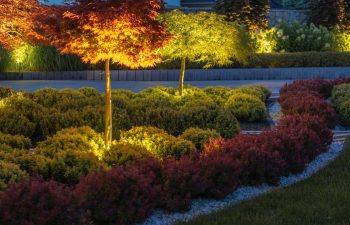
The azaleas are blooming, the dogwoods are showing off, and homeowners across Alpharetta and North Metro Atlanta are finally spending time in their yards again after winter. For many, that time outside brings an uncomfortable realization: the neighbors can see everything.
Maybe you noticed it while grilling on your patio. Perhaps it became obvious when you tried to enjoy your morning coffee in what was supposed to be a peaceful backyard retreat. Or maybe the new construction next door eliminated the natural buffer you once had. Whatever prompted the thought, the question is the same: how do you create privacy without your yard feeling like a fortress?
The answer, for most North Atlanta properties, is privacy trees. And if you’re considering them, April is the ideal time to plant.
The Spring Planting Advantage
Trees planted in spring have a significant head start over those installed at other times of year. Here’s why timing matters so much in Georgia.
Spring-planted trees benefit from warm soil that encourages rapid root development. After months of cold weather, Georgia soil temperatures in April reach the sweet spot where roots actively grow and establish. This underground development—invisible but crucial—determines how well your trees will handle their first summer.
The moderate temperatures of a Georgia spring also reduce transplant stress. Trees moved during scorching summer months must simultaneously recover from transplanting while coping with heat and drought conditions. Spring-planted trees have weeks of mild weather to settle in before summer’s challenges arrive.
Perhaps most importantly, spring planting gives trees an entire growing season to establish before winter dormancy. A tree planted in April has roughly seven months of active growth ahead. That same tree planted in fall has only weeks before it goes dormant, leaving it less prepared for the following summer.
Understanding Your Privacy Needs
Before selecting specific trees, think carefully about what you’re actually trying to accomplish. Privacy needs vary significantly from property to property.
- Screening Height: How tall does your barrier need to be? Blocking views from a single-story neighboring home requires different solutions than screening a two-story house or nearby road. Some homeowners need trees that will eventually reach 30 or 40 feet, while others need only 15 to 20 feet of coverage.
- Year-Round vs. Seasonal: Do you need privacy in winter as well as summer? Deciduous trees that drop their leaves offer no winter screening. For year-round privacy, evergreen varieties are essential.
- Speed vs. Longevity: Faster-growing trees often have shorter lifespans or become problematic over time. Slower-growing species require more patience but typically live longer and cause fewer issues. Understanding this tradeoff helps set realistic expectations.
- Available Space: How much room do you have for your privacy planting? A narrow strip along a property line limits your options differently than a deep side yard. Tree spacing requirements and mature widths must factor into your planning.
Popular Privacy Tree Options for Atlanta
Several tree species have proven themselves particularly well-suited to the North Atlanta climate and privacy screening applications.
- Leyland Cypress: The most popular privacy tree in the Southeast for good reason. Leylands grow quickly—often three to four feet per year in ideal conditions—and develop into dense, columnar screens. They reach 40 to 60 feet at maturity with spreads of 15 to 25 feet. Their soft, feathery foliage stays green year-round. The downsides: they’re susceptible to certain diseases in humid climates, have relatively shallow root systems that can make them vulnerable in severe storms, and their rapid growth can become a maintenance issue if not managed.
- Thuja Green Giant: An increasingly popular alternative to Leyland cypress. Green Giants grow nearly as fast—three to five feet annually—but are generally considered more disease-resistant and longer-lived. They mature at 40 to 60 feet tall with 12 to 20 foot spreads. Their natural pyramid shape requires less maintenance than Leylands to keep looking tidy.
- Cryptomeria (Japanese Cedar): A beautiful option that’s somewhat underutilized in Atlanta landscapes. Cryptomeria grows two to three feet per year, matures at 30 to 40 feet, and offers an elegant, soft-textured appearance distinct from the more common screening trees. They perform well in Georgia’s climate and resist most disease issues.
- American Holly: For situations requiring a more moderate-sized screen, hollies offer year-round privacy with the bonus of attractive red berries in winter (on female plants). They grow more slowly than the cypress family—about one to two feet per year—but are extremely durable and long-lived. Hollies work well where mature heights of 20 to 30 feet are sufficient.
- Nellie Stevens Holly: A hybrid holly that grows faster than American holly while maintaining similar durability. Nellie Stevens reaches 15 to 25 feet at maturity and develops a dense, pyramidal form ideal for screening. They require less maintenance than many faster-growing alternatives.
Common Mistakes to Avoid
Privacy tree installations fail for predictable reasons. Avoiding these common errors dramatically improves your chances of success.
- Planting Too Close Together: Homeowners eager for immediate privacy often space trees too tightly. This creates problems as trees mature—crowded root systems, competition for water and nutrients, and interior dieback as branches shade each other out. Follow proper spacing guidelines even though it means the screen won’t look fully filled in immediately.
- Ignoring Mature Size: That cute little tree from the nursery will eventually reach its genetic potential. Planting a tree that will reach 60 feet tall directly under power lines or five feet from your foundation creates predictable future problems. Always consider where the tree will be in 10 or 20 years, not just where it is today.
- Choosing the Wrong Species for the Site: Trees have specific requirements for sun exposure, soil drainage, and moisture levels. Planting a tree that needs full sun in a shaded location, or one that requires well-drained soil in a wet area, sets it up for failure regardless of how carefully it’s maintained.
- Neglecting Initial Care: Newly planted trees need consistent watering through their first year, especially during summer drought periods. Many homeowners assume that once trees are in the ground, nature takes over. In reality, that first year of care largely determines long-term success.
- Forgetting About the Property Line: Before installing a privacy screen, verify exactly where your property line falls. Trees planted too close to the boundary may encroach on neighboring property as they mature, creating potential legal issues and neighbor conflicts.
The Installation Process
Proper installation involves more than digging holes and dropping in trees. The process starts with a site assessment to evaluate soil conditions, sun exposure, drainage patterns, and existing landscape elements. This evaluation determines which species will thrive in your specific location and how they should be positioned.
Tree spacing calculations follow, based on the mature spread of your chosen species and the density of screening you desire. Closer spacing provides faster coverage but may require thinning later. Wider spacing takes longer to fill in but creates healthier trees long-term.
The actual planting involves proper hole preparation, root ball positioning, backfilling techniques, and initial staking if needed. Post-planting care includes establishing a watering schedule, applying appropriate mulch, and setting up any necessary irrigation.
Beyond Trees: Creating Complete Privacy
While trees form the backbone of most privacy solutions, the most effective screens often incorporate multiple elements. Understanding how different components work together helps create better results.
- Layered Plantings: Combining tall screening trees with lower shrubs in front creates denser coverage and more visual interest than trees alone. This layering also provides privacy at different heights—important if you have a patio lower than the neighboring sightlines.
- Strategic Placement: You don’t necessarily need to screen your entire property boundary. Analyzing specific sightlines and focusing screening efforts where they matter most can achieve privacy goals more efficiently and affordably.
- Combining Trees and Structures: In some situations, fencing or other hardscape elements paired with trees creates better results than either approach alone. A fence provides immediate privacy while trees establish, and eventually the trees soften the fence’s appearance while providing screening above its height.
Timing Your Project
If you’re considering privacy trees for your property, here’s how the timeline typically works.
Consultations can happen anytime, and spring is actually ideal for site visits since problem areas are visible and soil conditions can be properly evaluated. Depending on the scope of your project and current scheduling, installation can often occur within a few weeks of finalizing plans.
The key is starting the conversation now, during peak planting season. Waiting until summer means either planting in challenging conditions or delaying until fall, losing an entire growing season in the process.
Invest in Your Privacy
Privacy dramatically affects how you experience your property. A yard where you feel watched is a yard you don’t fully use. A yard that feels like a private retreat invites outdoor living, entertaining, and relaxation.
Well-chosen, properly installed privacy trees provide that screening naturally, improving with each passing year rather than degrading like fencing and other structures. They add property value, support wildlife, and contribute to the neighborhood’s overall green canopy.
Partner With Mobile Joe’s Landscaping
For over 35 years, Joe Archer and the team at Mobile Joe’s Landscaping have been helping Alpharetta homeowners create beautiful, functional landscapes—including privacy solutions tailored to each property’s unique challenges. Joe personally attends every job, bringing decades of experience to the specific conditions of your site.
Whether you need a complete privacy screen installation or want to evaluate your options before deciding, we’re here to help. We serve homeowners throughout Alpharetta, Milton, Roswell, Johns Creek, Cumming, Dunwoody, Buckhead, and the greater Atlanta metro area.
Contact Mobile Joe’s Landscaping today to schedule your consultation. Spring planting season is here—make the most of it.
Posted on behalf of
12460 Crabapple Rd. Suite 202 - 407
Alpharetta, GA 30004
Phone: (770) 360-5604
Email: [email protected]
Mon. - Fri. 8:30 AM – 7:00 PM