
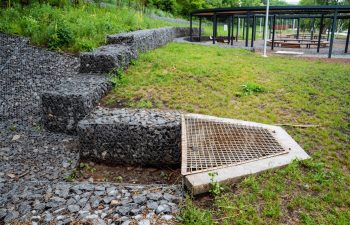
March in North Georgia brings something homeowners either love or dread: rain. Lots of it. As temperatures warm and spring storms roll through Alpharetta, Milton, and the surrounding communities, yards that seemed perfectly fine during winter suddenly reveal their drainage secrets. That corner of the backyard that stays wet for days. The mulch beds that turn into miniature swamps. The water pooling uncomfortably close to your foundation.
If any of this sounds familiar, you’re not alone. Georgia receives an average of 50 inches of rainfall annually, and a significant portion falls during the spring months. At Mobile Joe’s Landscaping, we’ve spent over 35 years helping North Atlanta homeowners transform waterlogged nightmares into properly draining landscapes—and March is when we get the most urgent calls.
Why Spring Reveals Your Drainage Problems
Winter’s frozen ground and dormant plants often mask drainage issues. But as temperatures rise and the soil thaws, water behaves differently. Spring rains saturate soil that’s already holding winter moisture, and suddenly your yard can’t absorb another drop. Meanwhile, the trees and shrubs that would normally drink up excess moisture haven’t fully leafed out yet, leaving more water with nowhere to go.
This creates the perfect conditions for identifying problems you might not have noticed before. And while standing water after a brief shower might seem like a minor annoyance, ignoring drainage issues leads to consequences that are anything but minor.
The Hidden Costs of Poor Drainage
Water that doesn’t drain properly doesn’t just sit there looking unsightly—it actively damages your property in ways that compound over time.
- Foundation Damage: Water pooling near your home’s foundation creates hydrostatic pressure that can crack concrete, seep into basements, and compromise structural integrity. Foundation repairs typically cost thousands of dollars and could have been prevented with proper grading and drainage solutions.
- Lawn and Plant Death: Grass roots need oxygen to survive. When soil stays saturated, roots essentially drown, leading to brown patches, bare spots, and the need for costly lawn renovation. Ornamental plants and shrubs suffer similarly, with root rot claiming expensive landscaping investments.
- Mosquito Breeding Grounds: Standing water is an open invitation for mosquitoes. Even small puddles that persist for a week provide ideal breeding conditions, turning your backyard into a pest problem that affects your family’s outdoor enjoyment.
- Erosion and Soil Loss: Water moving across your property carries topsoil with it. Over time, you’ll notice bare spots, exposed roots, and landscapes that literally wash away. The beautiful beds and healthy turf you’ve invested in can disappear one rainstorm at a time.
- Hardscape Damage: Patios, walkways, and retaining walls suffer when water undermines their foundations. Settling, cracking, and shifting are common consequences of drainage problems left unaddressed.
Signs Your Property Needs Drainage Help
Not sure if your drainage qualifies as a “problem”? Here’s what to watch for during March’s rainy periods:
- Water Pooling for More Than 24 Hours: Healthy soil should absorb rainwater within a day. If puddles persist longer, your drainage needs attention
- Soggy or Spongy Lawn Areas: Walking across your yard shouldn’t feel like crossing a marsh
- Water Stains on Foundation: Discoloration or mineral deposits on your home’s exterior walls indicate water reaching places it shouldn’t
- Gutter Overflow Patterns: Notice where water goes when gutters overflow—if it’s heading toward your foundation rather than away from it, grading may be off
- Erosion Channels: Small gullies or channels forming in your lawn or beds show water is moving with enough force to carry soil
- Mold or Mildew Near the House: Persistent moisture creates conditions for unhealthy growth
- Dying Plants in Low Areas: Plants that struggle specifically in low spots are telling you something about water accumulation
Solutions That Actually Work
The good news? Drainage problems are solvable. The key is matching the right solution to your property’s specific challenges—something that requires experience reading landscapes and understanding how water moves.
- French Drains: These underground systems intercept water before it reaches problem areas, channeling it safely away through perforated pipes surrounded by gravel. French drains work particularly well for yards where water moves from higher neighboring properties onto yours, or where subsurface water creates persistent sogginess.
- Dry Creek Beds: Part functional drainage, part aesthetic feature, dry creek beds create natural-looking channels that guide water during storms while adding visual interest to your landscape during dry periods. They’re particularly effective in Georgia’s clay-heavy soils where water moves across the surface rather than soaking in.
- Grading and Resloping: Sometimes the simplest solution is adjusting your property’s contours. Professional grading ensures water flows away from structures and toward appropriate drainage points. Even subtle changes in slope can dramatically improve how your property handles rainfall.
- Channel Drains: For hardscaped areas like driveways, patios, and pool surrounds, channel drains collect surface water before it can pool or flow toward structures.
- Catch Basins and Underground Piping: Strategic placement of collection points connected to underground pipes can move large volumes of water from problem areas to appropriate discharge locations.
Why March Is the Time to Act
Waiting until summer to address drainage issues means suffering through another season of soggy yards, stressed landscapes, and potential property damage. More importantly, spring is ideal for drainage work because:
- The Ground Is Workable: Soil that’s moist but not frozen or rock-hard allows for efficient excavation and installation.
- You Can See the Problems: Active rainfall reveals exactly where water goes and where it pools, making diagnosis accurate.
- Plants Are Still Dormant: Installing drainage systems before spring growth kicks into high gear minimizes disruption to your landscape.
- You’ll Be Ready for Summer Storms: Georgia’s summer brings intense afternoon thunderstorms. Drainage systems installed now protect you year-round.
The Mobile Joe’s Approach
Joe Archer has built this family business over 35 years by treating every property as unique. When we evaluate drainage issues, we consider your entire landscape—the slope of your lot, the location of structures, existing hardscapes, soil composition, and where water currently flows during storms. We’re not looking to sell you a one-size-fits-all solution; we’re designing an approach that actually solves your specific problems.
Our clients trust us because we combine decades of hands-on experience with genuine care for their properties. As one longtime customer put it, “Joe’s expertise in both hardscape and softscape has added significant value to my properties.” That expertise extends to understanding how water, soil, plants, and structures all interact—and how to make those interactions work in your favor.
Take Control Before the Next Storm
March rains don’t have to mean muddy yards and foundation worries. If you’ve noticed any drainage warning signs on your Alpharetta, Milton, Johns Creek, Roswell, or North Atlanta property, now is the time to get a professional evaluation.
Contact Mobile Joe’s Landscaping at (770) 360-5604 or (706) 514-0080 to schedule a consultation. We’ll assess your property’s drainage challenges and recommend solutions that protect your investment for years to come. Don’t spend another spring watching your yard turn into a swamp—let us help you take control of where the water goes.
Posted on behalf of
12460 Crabapple Rd. Suite 202 - 407
Alpharetta, GA 30004
Phone: (770) 360-5604
Email: [email protected]
Mon. - Fri. 8:30 AM – 7:00 PM